
Could a granny flat add more value to your property than it costs to build?
With new rules making it easier to build granny flats in New Zealand, more homeowners are considering whether a second dwelling could be a smart investment. But if your ultimate goal is to sell your property for the best possible price, is adding a granny flat really worth the expense?
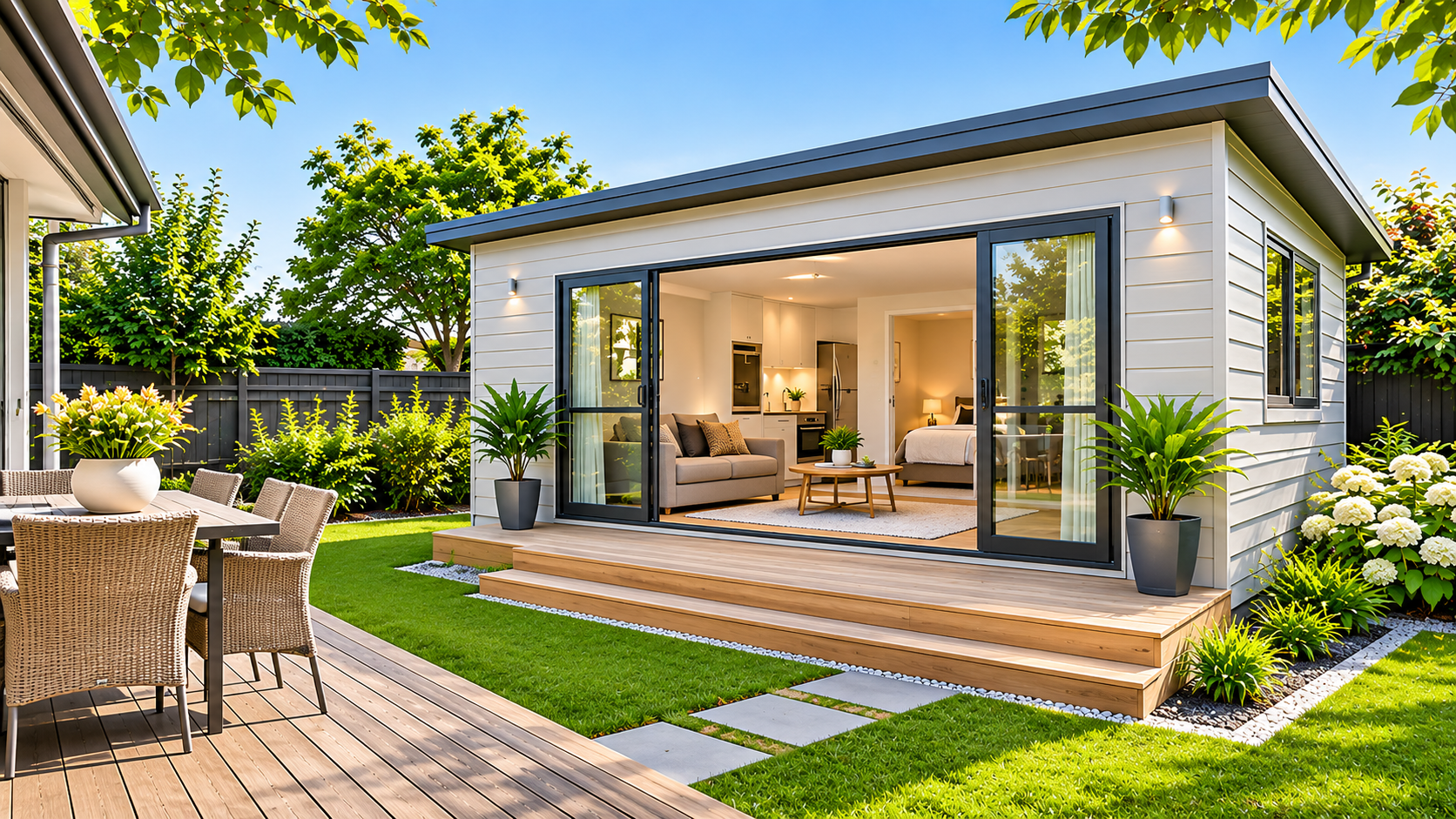
For East Auckland homeowners, particularly those with larger sections in suburbs such as Bucklands Beach, Howick, Farm Cove, Pakuranga Heights and Botany Downs, it’s a question worth exploring before committing to a build.
WHAT’S CHANGED WITH THE GRANNY FLAT RULES?
Since 15 January 2026, certain new, standalone, single-storey granny flats of up to 70m² can be built without a building consent, provided they meet all the exemption requirements. Some also qualify for a resource consent exemption.
However, this doesn’t mean homeowners can simply build wherever they like. The dwelling must comply with the Building Code, qualified professionals must be involved, and a Project Information Memorandum (PIM) must be obtained from the council before construction begins. Planning restrictions, natural hazards and other site-specific requirements may still apply.
These changes can reduce some of the cost and complexity, but building a granny flat remains a significant financial commitment.
WILL A GRANNY FLAT INCREASE YOUR PROPERTY’S VALUE?
Potentially, yes. A well-designed, compliant granny flat can make a property more appealing to a wider range of buyers.
For example, a home with a separate dwelling may attract extended families wanting independent accommodation for parents or adult children. It could also appeal to buyers seeking rental income to help with mortgage repayments, or those wanting flexible living arrangements.
In established East Auckland neighbourhoods, this additional versatility could be a genuine selling point.
But there’s an important distinction between adding value and making a profit. Spending $200,000 on a granny flat doesn’t necessarily mean your property will sell for $200,000 more. The eventual return depends on buyer demand, the property’s location, the quality of the build and what comparable properties are selling for.
THE HIDDEN COSTS THAT CAN EAT INTO YOUR PROFIT
The advertised price of a prefabricated granny flat or building package may be only part of the total expense.
Homeowners also need to consider site preparation, foundations, drainage, water and power connections, access, landscaping, professional fees and potential council development contributions.
Some East Auckland sections may present additional challenges, including sloping land, limited access, existing drainage infrastructure or flood-related restrictions.
Finance costs, insurance and ongoing maintenance should also be considered, particularly if you’re borrowing money to complete the project.
Before proceeding, it’s essential to calculate the full cost rather than relying on the advertised building price alone.
COULD YOU BE SACRIFICING SOMETHING BUYERS VALUE MORE?
One factor homeowners sometimes overlook is the impact a granny flat can have on the existing property.
A large, private backyard can be a major attraction for family buyers, particularly in popular school-zone locations such as Bucklands Beach, Mellons Bay and Farm Cove.
If a second dwelling significantly reduces outdoor living space, compromises privacy or makes parking and access difficult, some potential buyers may see it as a disadvantage.
A granny flat that works beautifully for one family may not suit the needs of another.
The best results are likely to come from thoughtful positioning and design that complement the main home rather than compromise its appeal.
BUILDING TO SELL VS BUILDING TO KEEP
Your intended timeframe makes a difference.
If you plan to remain in the property for several years, a granny flat could provide rental income, accommodation for family members or greater flexibility as your circumstances change. These benefits may help justify the investment over time.
However, if you’re planning to sell within the next year or two, the financial calculation becomes more immediate.
You need to consider whether the likely increase in sale price will exceed the total building costs, financing expenses and any additional selling-related costs.
In some cases, selling the property with its development potential intact may be a better option than undertaking the construction yourself.
WHAT SHOULD EAST AUCKLAND HOMEOWNERS DO BEFORE BUILDING?
Before spending money on plans or construction, start by understanding your property’s current market value and what it could realistically achieve with a completed granny flat.
Compare properties with similar land sizes, locations and secondary accommodation. Seek advice from qualified building and planning professionals about feasibility and costs, and check all relevant requirements with Auckland Council.
Most importantly, consider what buyers in your particular neighbourhood are looking for.
A property in Howick may appeal to a different buyer demographic than one in Flat Bush or Half Moon Bay, and the potential value of an additional dwelling can vary accordingly.
THE BOTTOM LINE: WILL IT BE WORTH IT WHEN YOU SELL?
A granny flat can be a valuable addition to the right property, offering extra accommodation, flexibility and potential income. But it’s not a guaranteed shortcut to a higher sale price or bigger profit.
If selling is your end goal, the smartest first step may be a market appraisal rather than a building quote.
At Team Vish, we understand what buyers are looking for across East Auckland. If you’re considering adding a granny flat before selling, we’d be shappy to discuss your property’s current value, local buyer demand and whether the investment is likely to make financial sense.
Sometimes, the most profitable improvement is knowing what not to spend money on.